Straight Neck (Turtle Neck Syndrome)
What is Straight Neck Syndrome or Turtle Neck Syndrome?
Seen from the side while you stand upright, a normal cervical spine forms a gentle C-shaped curve that bulges forward. In straight neck, also called turtle neck syndrome, that forward curve (cervical lordosis) is lost and the neck straightens out, so the head juts forward like a turtle's. If the condition progresses, the neck may pass through a straight I-shape and eventually curve the other way, into a reversed C.
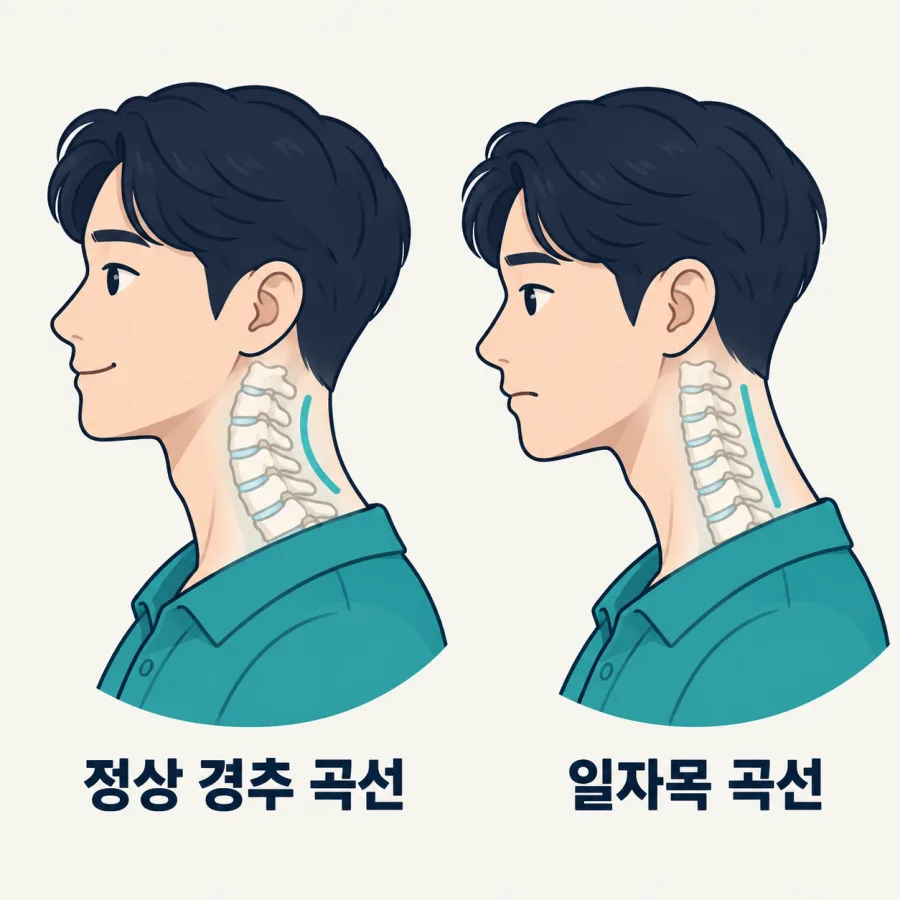
What causes Straight Neck Syndrome?
The causes are varied. With age, degenerative change wastes the muscles of the neck and spine, which makes straight neck more likely. These days, however, overuse of smartphones and computers has become the leading cause. Problems in the cervical spine itself — cervical disc herniation, cervical facet joint syndrome — or deformity of the thoracic or lumbar spine can also be responsible, but by far the biggest cause is sitting or living in poor posture for long stretches at a time. Driving for hours in a poor position, standing hunched over while you work, or using a computer, smartphone, or tablet for long periods all let the head drift forward without your noticing, and holding that posture over time is what produces a straight neck.
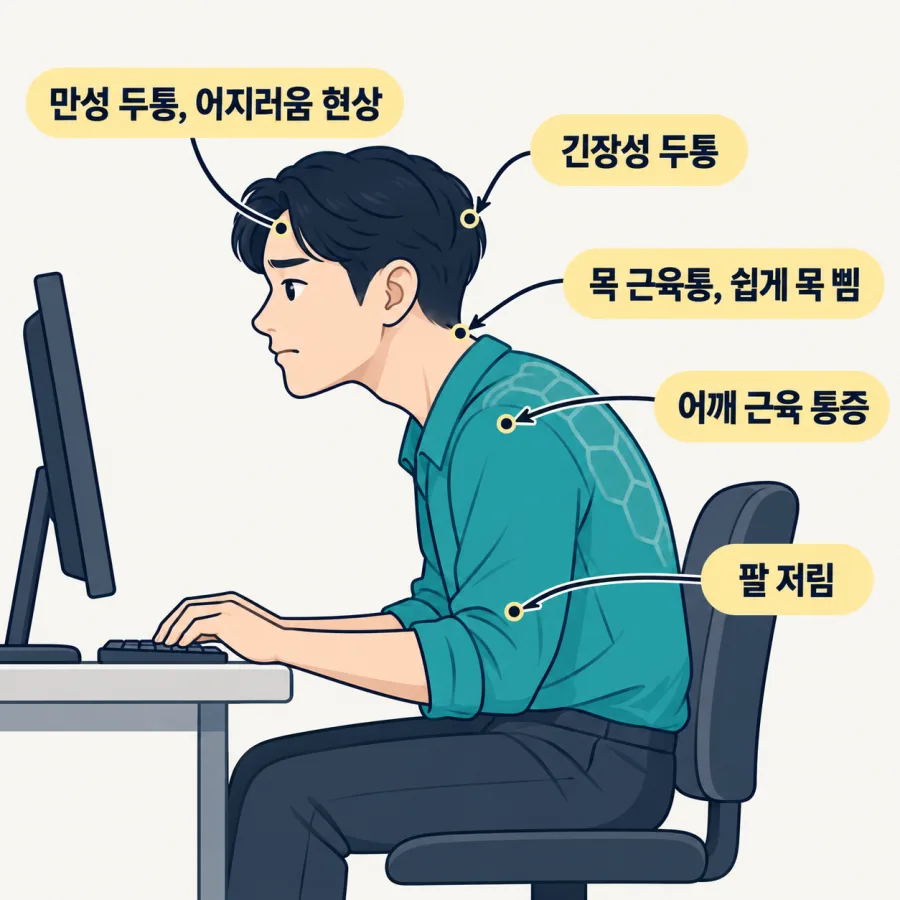
What symptoms does Straight Neck Syndrome cause?
Straight neck causes muscle pain and various other kinds of pain. Most people feel a deep ache around the neck and the trapezius muscle (commonly felt as the shoulders). This happens because the muscles stay over-tensed for a long time until they harden and become painful. When the muscle pain gets worse, numbness in the arm may appear as well. The neck may make a sound when you turn it, and it may be easily strained. The nerve below the back of the head can be pinched between the skull and the cervical vertebrae, sometimes causing a tension headache over the occipital region, and chronic headache may bring a ringing sensation in the head. This pain can disturb sleep and leave you fatigued.
What treatments help with Straight Neck Syndrome?
Keeping good posture is the foundation of treatment and the single most important part of it. Posture alone accounts for about half of the benefit of treatment.
What postures support neck health in daily life?
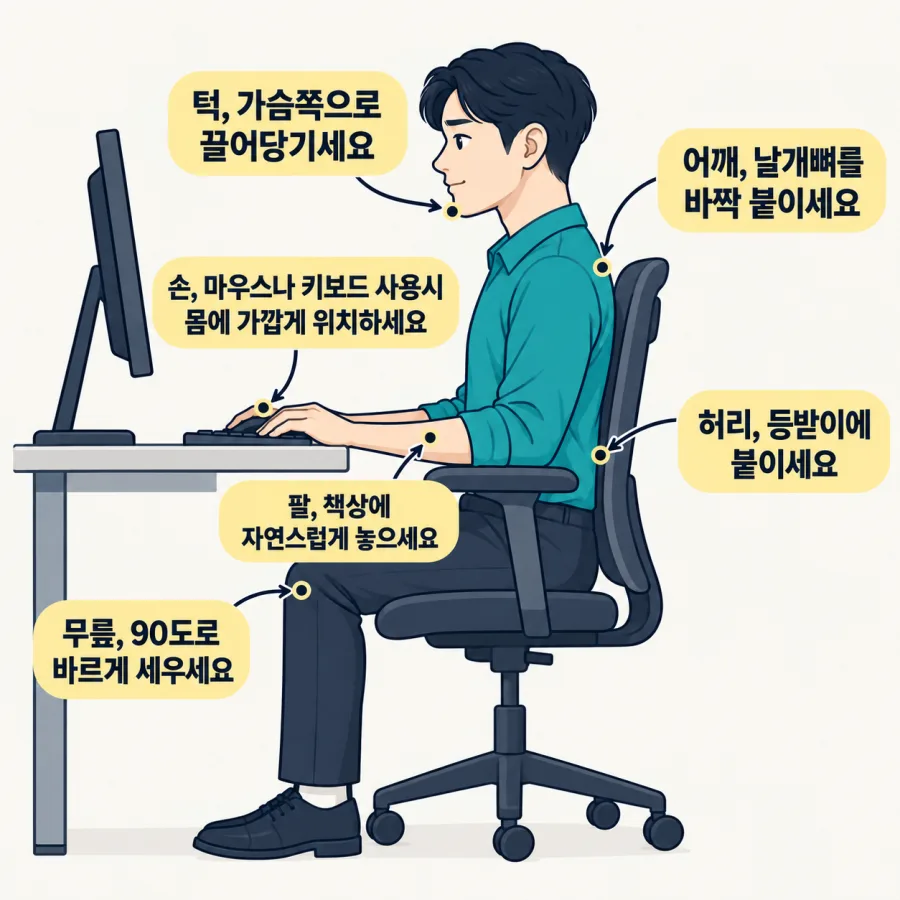
1. Straighten your back, keep it against the backrest, and draw your chin toward your chest.
2. Rest your arms naturally on the desk.
3. Positioning your mouse and keyboard close to your body also helps.
4. When sitting in a chair, keep your shoulders and shoulder blades pressed back against it.
5. Keep your knees upright at 90 degrees.
6. When using a computer for long periods, set the monitor so that you look 10-15 degrees below eye level.
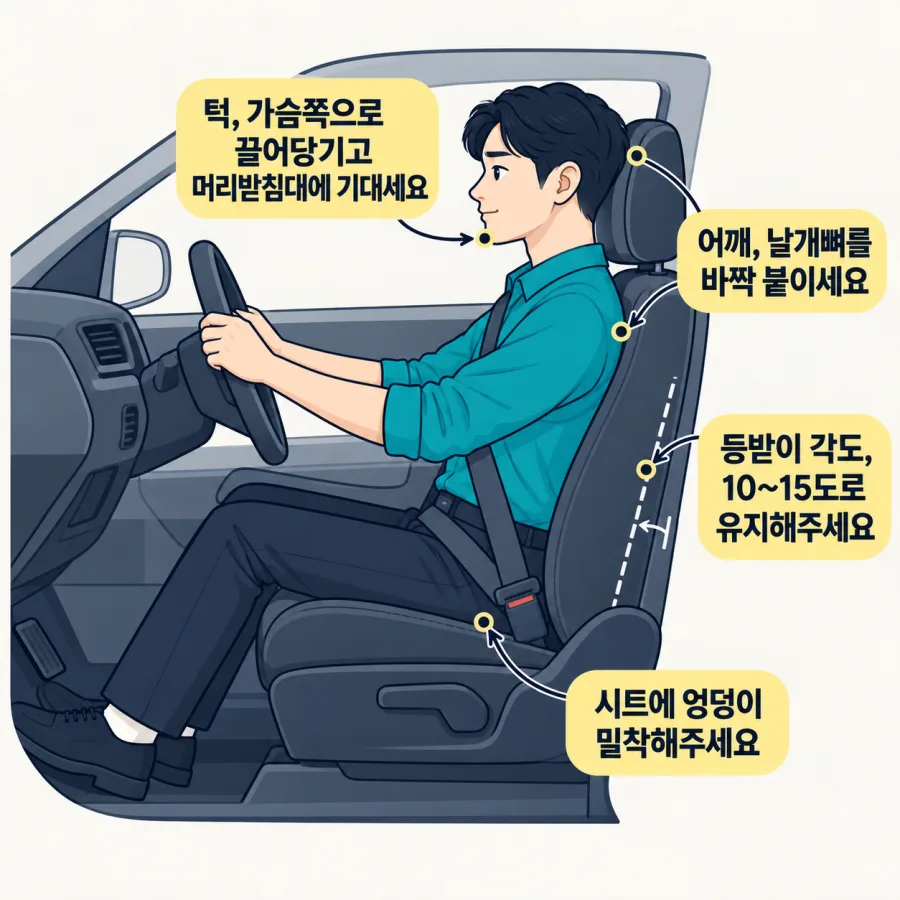
7. When driving, recline the backrest about 10 degrees so that your back and neck stay upright, which reduces the tendency to push your head forward.
8. Keep your back and buttocks pressed firmly against the seat, and rest your head on the headrest.

9. When using a smartphone, hold it as close to eye level as you can, so that you do not drop your head without noticing.
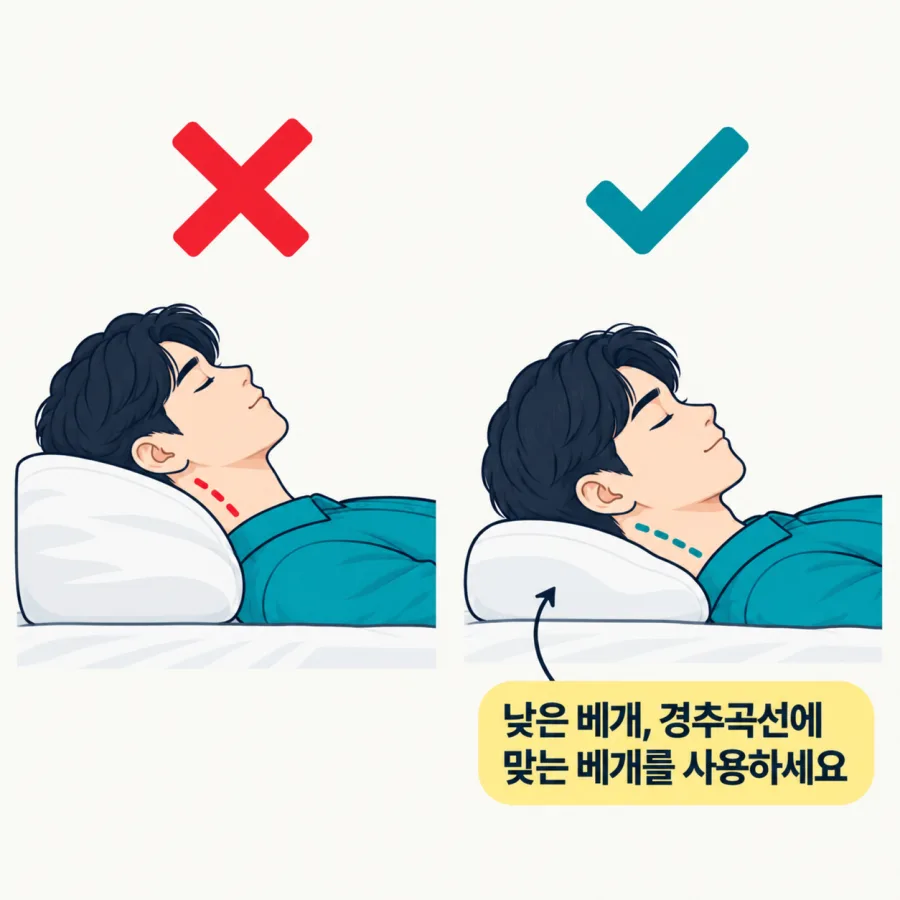
10. A high pillow can lead to a straight neck, so use a low pillow when you sleep, ideally one shaped to support the curve of the cervical spine.
11. Rolling a towel to about the thickness of your forearm and placing it under your neck as you sleep also helps. Avoid sleeping on your side or on your stomach, as both twist the cervical spine.
What exercises are good for neck health, and how exactly should they be done?
Two things help the neck: cervical spine exercises (stretching) and neck muscle strengthening exercises. Many people have neck pain, yet it is hard to hold the neck in a healthy, extended posture all day. For that reason it is best to stretch the neck and shoulder joints as shown below once an hour, or during breaks from study or work. These stretches relieve tension in the muscles at the back of the neck and help prevent a chronic straight neck, while the added flexibility of the neck joints keeps the muscles from stiffening.
- Stretch until you feel the target area being pulled.
- Repeat once every 1-2 hours.
Cervical Spine Exercises (Stretching)
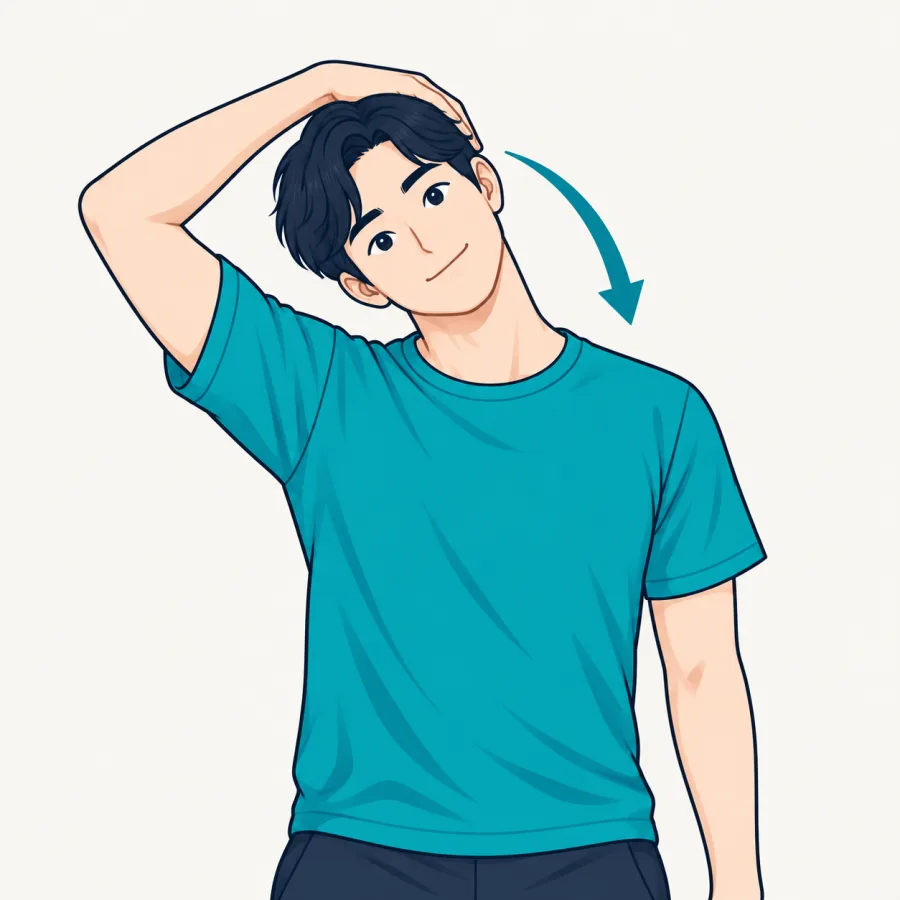
1. Pull your head so that your ear touches the opposite shoulder.
(Ear to Shoulder)
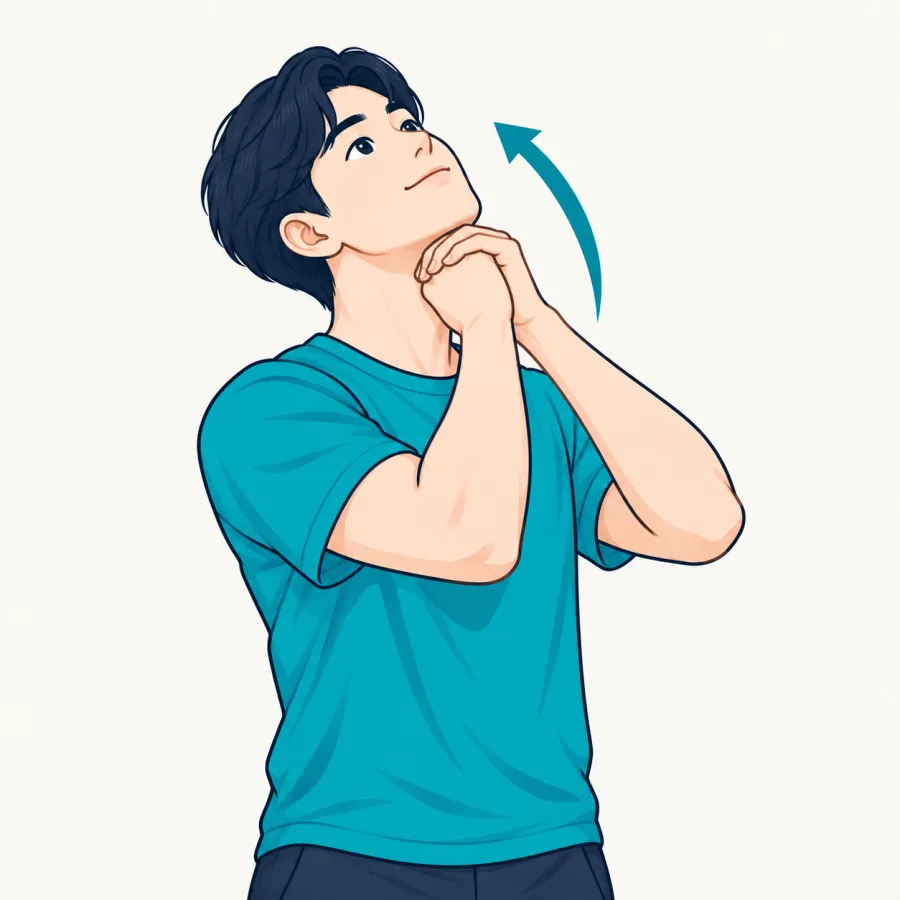
2. Use your thumb to push your chin upward. Then relax the neck and head, and repeat the same movement.
(Neck Backward Tilt)
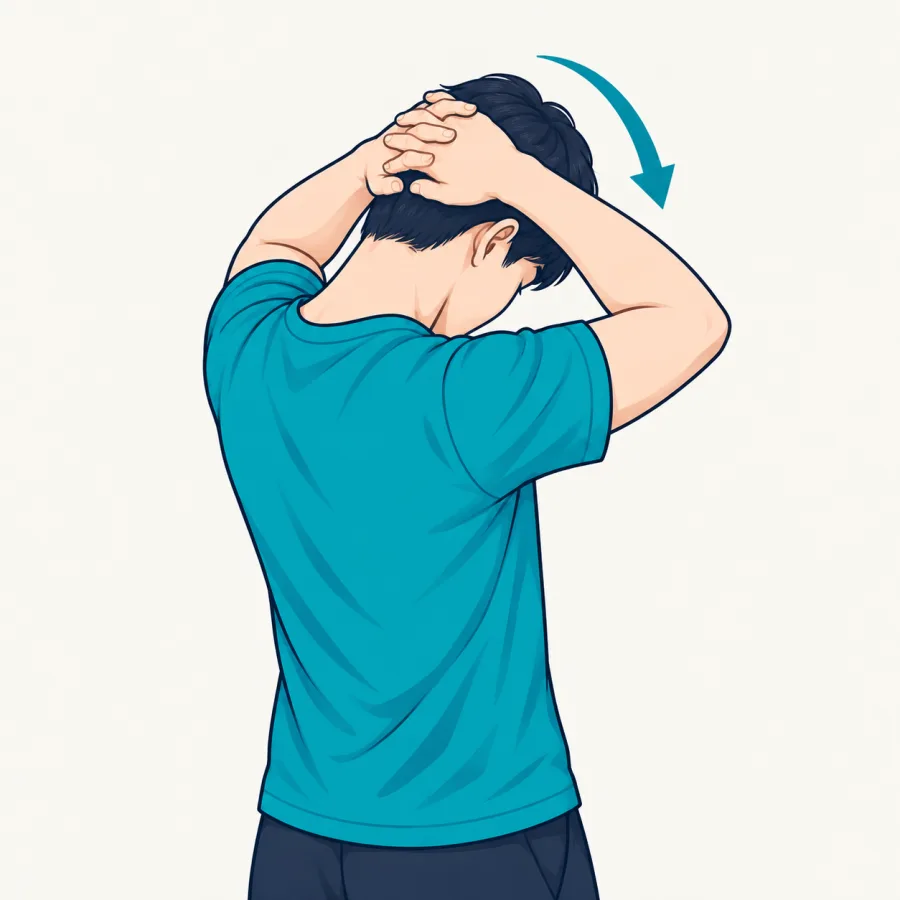
3. With fingers interlaced, gently press the back of your head forward, and repeat the same movement.
(Neck Forward Bend)
Neck Muscle Strengthening Exercises
When the forward head posture of turtle neck is held for a long time, the muscles wrapped around the neck become tense. These exercises loosen neck muscles that knot and stiffen easily, and strengthen the muscles that have grown weak.
- Keep your chin tucked throughout every movement.
- Skip any movement that causes pain while you exercise.
- Repeat every movement 6 times, holding each for 10 seconds.
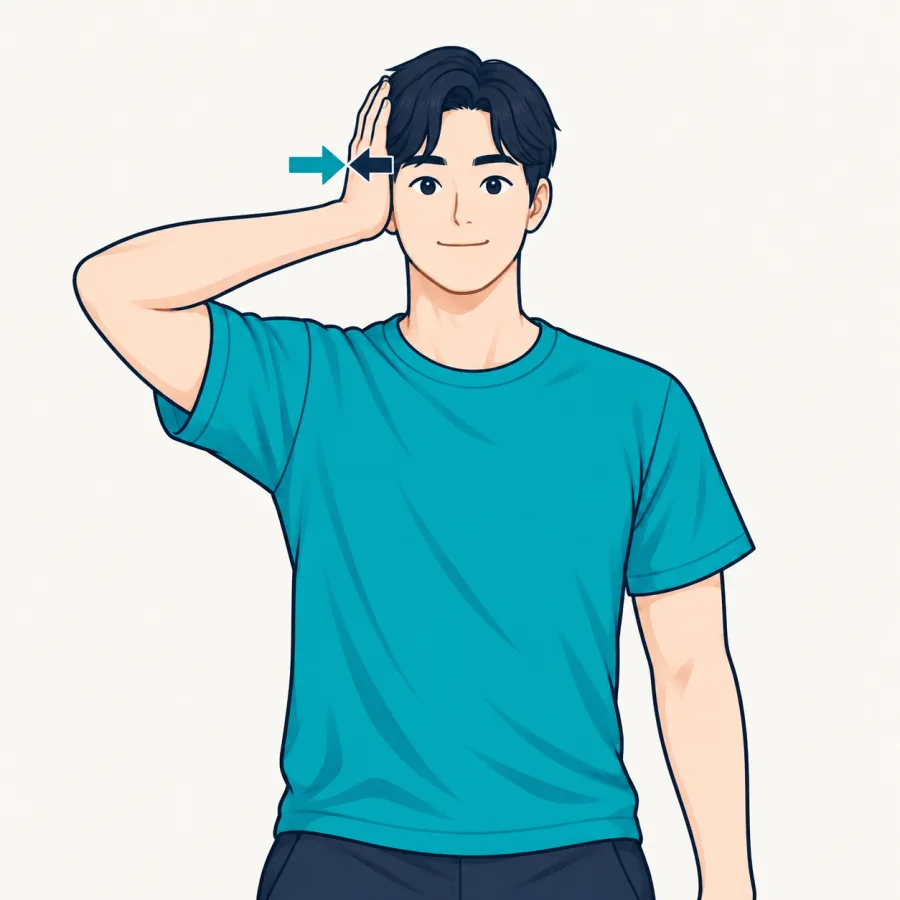
1. Support the side of your head with your palm, and push palm and head firmly against each other.
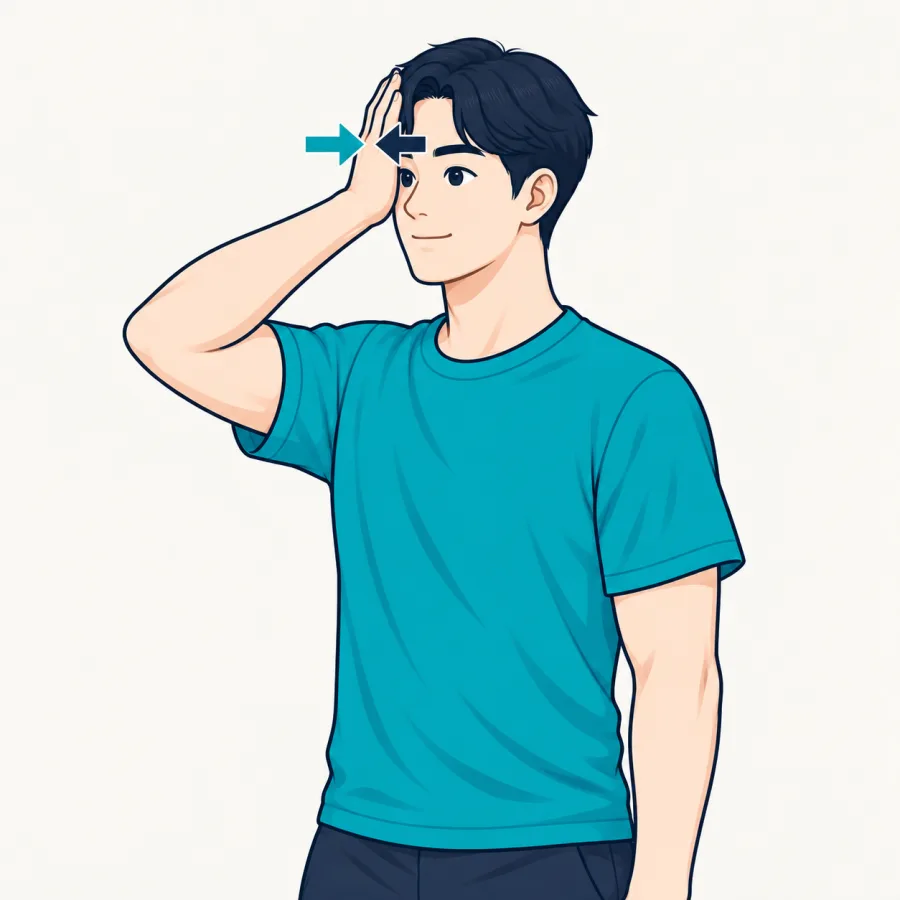
2. Place your palm on your forehead, and push palm and forehead firmly against each other.
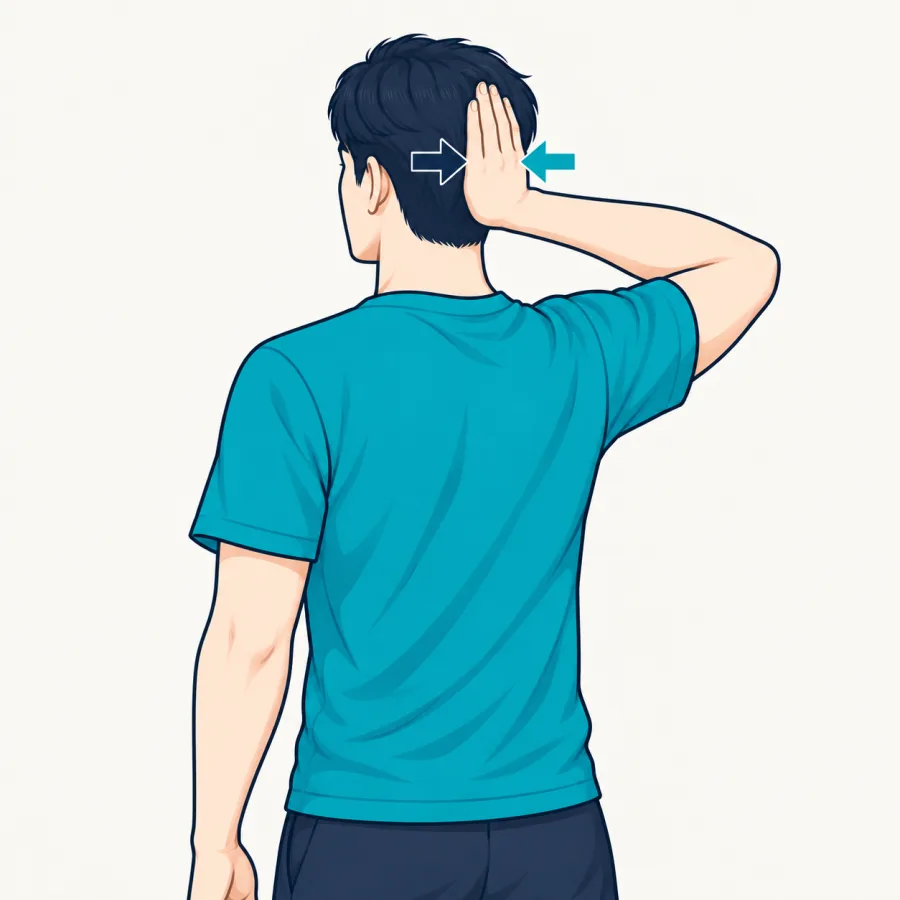
3. Place your hands behind your head, then push your head backward and your hands forward against each other.
Medical review: Cervical Spine Research Society · Provided by the Korean Society of Spine Surgery