“To our esteemed past presidents, advisors, councillors, and all members of the Korean Society of Spine Surgery.”
It is my profound honor to be entrusted with the weighty duty of serving as President of the Korean Society of Spine Surgery, an institution that boasts the greatest history and tradition in Korea. At the same time, I feel the weighty responsibility of designing a new future for our Society, and I would like to share the vision and management direction of the incoming presidential team that will guide our Society going forward.
Over the past half-century, our Korean Society of Spine Surgery has pioneered the field of spine surgery for the first time in Korea, introduced advanced surgical techniques, laid the foundations of spinal medicine in Korea, and led its academic advancement. Composed, in both name and substance, of the finest spine surgeons in Korea, our Society has fulfilled a pivotal role that forms the very cornerstone of the nation's spinal health at medical sites throughout the country.
However, the changes of the times that we have recently confronted demand that we meet fierce challenges to the Society's standing and development. The rapid innovation sweeping across all industries is pressing for a paradigm shift in the field of spine surgery, and intense competition with the many related societies that lay claim to the spine field has now become an unavoidable reality. Moreover, in keeping with the diverse and elevated demands of patients who now expect standards on par with those of advanced nations, we have been given the solemn mission of maintaining and strengthening the clinical and academic competitiveness of our members at the highest level.
Traditional methods of running a society alone cannot keep pace with an era that changes overnight. Patients and young physicians accustomed to the digital culture and social media that have already permeated every corner of society are turning their attention to other societies that have adapted swiftly to these channels. On the strength of the trust built by obtaining information and communicating there, these later-established societies are expanding their influence by holding larger congresses and operating more advanced journals.
If we fail to read the currents of the times, rest content with internal solidarity alone, and cling only to a past tradition cut off from the outside world, we can no longer guarantee any future. We have witnessed countless times the harsh reality of organizations that, having fallen behind in this competition, never recover and are left to wither away.
First, I will establish an industry-academia 'AI, Robotics, and Big Data Convergence Committee.' I will organically connect the AI, robotics, and engineering capabilities that are now becoming the technological standard across all industries with our Society's spine surgery models. Through this, we will build high-quality clinical evidence and big data, and become an official channel of communication linking companies seeking cutting-edge technology with the medical field. By laying the groundwork for the industrialization of spinal surgical techniques and a shift in business models, we will maximize participation in the Society by creating an educational foundation and a society-centered network through which the young physicians of future generations can naturally engage with AI and robotics environments.
Second, I will secure global leadership through the standardization of technology in the fields of spine surgery that we lead, such as minimally invasive and endoscopic surgery. I will set in motion a Korea-led international minimally invasive network (a Korea–U.S.–Southeast Asia network). Building on our Society's authenticity, we will establish standard treatment formats and construct a large-scale database in the form of the world-renowned research group ISSG (International Spine Study Group). Through this, our Society will firmly take hold of the academic leadership in the endoscopic and minimally invasive fields that is currently scattered sporadically at home and abroad.
Third, I will robustly build a policy headquarters function and a government-liaison network. In order to give real weight to the voice of our Society, which has hitherto been marginalized in the process of national healthcare policymaking, I will hold regular policy forums and round tables. I will establish and manage a standing network system in which the Society participates together with the Health Insurance Review and Assessment Service (HIRA), the Ministry of Health and Welfare, figures from political and government circles, and members of the press. To support this, I will elevate the existing Insurance Committee to the level of a 'Policy Headquarters' so that it may communicate with policymakers on an equal footing.
In addition, I will completely reform the Society's operating structure so that these industry-academia collaborations, policy networks, and international academic units can communicate organically. To convert administrative work that has hitherto relied on personal networks into a systematic organization, I will establish and operate a 'Planning Committee.' Dividing its work into seven detailed areas—academic events, industry-academia cooperation, external cooperation, journals, insurance, policy, and membership management—I will strengthen the linkage between the central organization and the individual research societies. Through annual activity reports, five-year performance evaluations, and, ultimately, the publication of a 'Society White Paper,' I will complete a transparent and sustainable system.
Furthermore, to represent the Society's transformed standing and to communicate with our members, I will establish 'digital media guidelines' that enable popular communication while preserving the dignity of the Society. I will completely overhaul the official website, transforming it into an interactive '21st-century face of the Society' that anyone in the world would wish to visit.
Lastly, I will carry out a great academic reform to respond proactively to the regulatory environment that will change from this coming July, and to impress our Society's overwhelming scale and unity upon audiences at home and abroad. On the day before next May's Spring Academic Congress, I will hold the conferences of the individual research societies and chapters in conjunction, thereby maximizing the impact of the event.
I will design a global conference bringing together a host of the world's foremost scholars, including Alex Vaccaro, Michael Wang, and Rolando Garcia of the United States, Han-Jo Kim, and my longtime colleague and world-class master Michael Grevitt. By focusing the attention of the entire world, I will raise our Society's academic standing and, beyond the Asia-Pacific region, firmly consolidate the Korean Society of Spine Surgery's authenticity and leadership on the global stage of spine surgery.
Esteemed members, gathering the shared will of all of us who aspire to the Society's new leap forward and development, I will devote all of my abilities and do my utmost so as never to fall short of your expectations. I ask for your ardent support and active participation.
Thank you.
May 2026
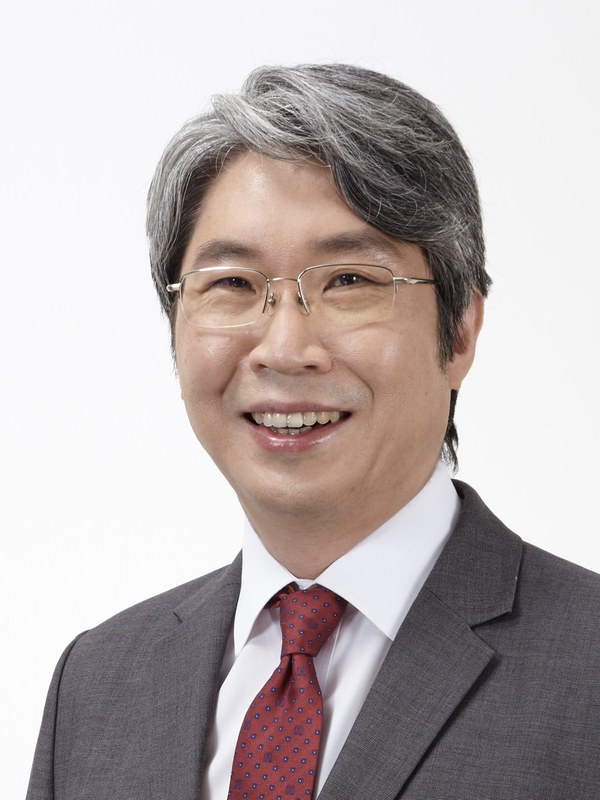
Seok Woo Kim, President of the Korean Society of Spine Surgery